Selecting the Top 10 Bucket Elevator Manufacturers Worldwide requires more than comparing company size or website visibility. Buyers need equipment that moves grain, cement, fertilizer, minerals, or other bulk materials safely and consistently. A reliable bucket elevator should handle continuous loading, controlled discharge, dust protection, and demanding operating conditions.
This guide examines manufacturers through practical industry criteria, including engineering experience, product range, customization, materials, safety features, service coverage, and maintenance support. It also considers evidence from technical documentation, installation records, certifications, and customer feedback. Real performance matters. A polished brochure cannot replace a stable elevator running inside a dusty processing plant.
Details matter greatly.
The selected companies may serve different industries and regional markets. Some specialize in heavy-duty systems, while others focus on compact agricultural installations or tailored conveying lines. Their designs can include belt or chain systems, inspection doors, backstops, sensors, and wear-resistant buckets. These features influence capacity, energy use, downtime, and long-term operating costs.
No ranking can fit every project. That is worth stating clearly. A manufacturer suitable for a cement terminal may not suit a small grain facility. Pricing, local support, spare-parts access, and installation conditions can change the final decision. This overview therefore offers a practical comparison, not an absolute verdict. Readers should verify specifications directly with manufacturers before selecting equipment for a specific application.
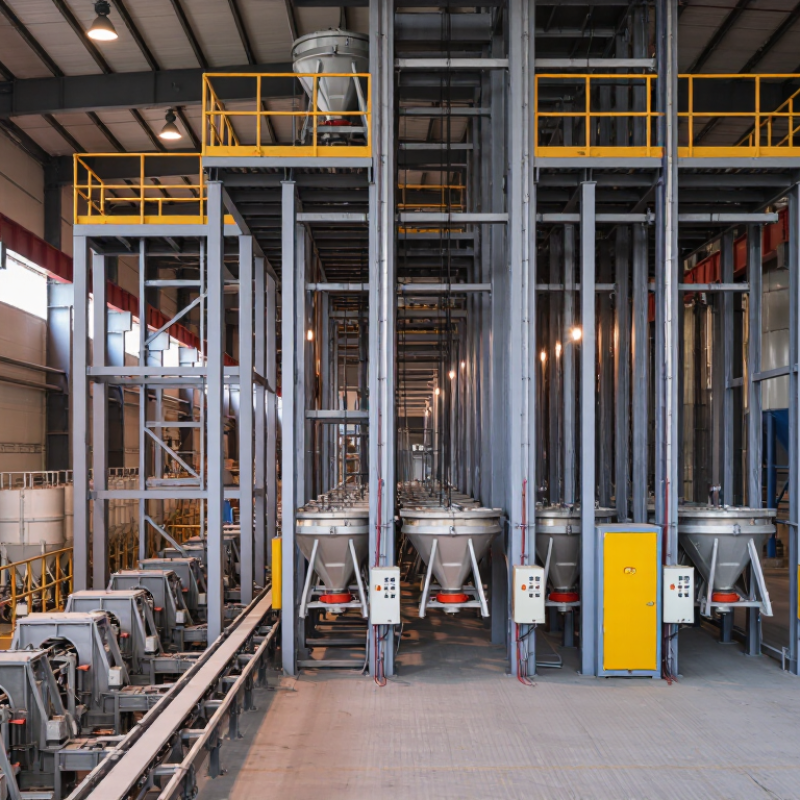
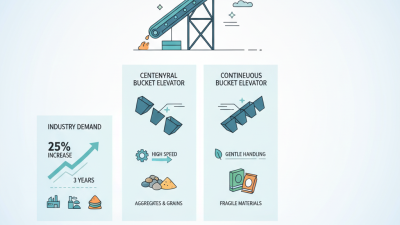
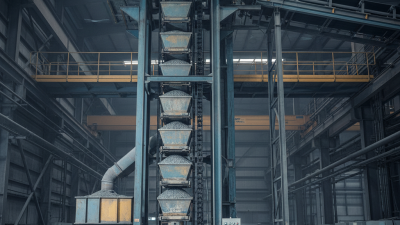
A bucket elevator lifts bulk solids vertically with a small footprint. Its design begins with capacity, lift height, and material behavior. A belt or chain carries buckets through a sealed casing. The buckets scoop material from the boot and discharge it near the head pulley. Centrifugal discharge suits many grains, while continuous discharge handles fragile or sticky products better. Higher speed can increase output, but it also raises dust, wear, and alignment risks.
FAO’s Food Outlook, published in May 2024, forecasts global cereal production at nearly 2.85 billion tonnes. This scale supports strong demand for vertical conveying in grain terminals, feed mills, fertilizer plants, cement works, and biomass facilities. Engineers should examine bulk density, moisture, abrasiveness, temperature, and particle size before selecting bucket spacing. CEMA guidance also highlights loading, belt tension, and pulley design as key reliability factors. A perfect installation is unrealistic. Small design compromises can become expensive maintenance problems.
Tips: Keep the boot accessible for cleaning and inspection. Use speed sensors, belt alignment switches, and bearing temperature monitoring. OSHA grain-handling requirements also reinforce dust-control and housekeeping practices. Do not assume a larger motor solves poor loading. It often hides the real problem. Test the elevator with the actual material, not only an empty run.
Evaluating global bucket elevator manufacturers requires more than comparing catalog capacity. Start with verified performance data: throughput, lift height, belt speed, power demand, and discharge efficiency. CEMA engineering guidance recommends calculating each conveyor from material density, particle size, moisture, and operating conditions. A supplier using one standard design for every site deserves careful review.
Reliability should be measured in service hours, not promises. Request test records, failure rates, bearing temperatures, belt tracking results, and maintenance intervals. The U.S. Department of Energy’s 2023 Industrial Decarbonization Roadmap identifies motor systems as a major industrial energy concern, so energy-efficient drives and accessible components deserve close attention.
Numbers matter. Ask for the test method.
Safety and documentation reveal engineering maturity. ISO 12100 supports structured machinery risk assessment, while NFPA 61 addresses fire and explosion hazards in agricultural and food-processing facilities. Manufacturers should provide guarding details, emergency-stop layouts, dust-control measures, inspection points, and conformity documents. Service coverage also matters. Check local technicians, spare-parts lead times, commissioning support, and response procedures.
A practical evaluation should compare at least ten suppliers using the same scoring sheet. Weight reliability, safety, lifecycle cost, customization, and technical support. The 2024 World Steel Association statistics show global steel production exceeding 1.8 billion tonnes, reflecting the scale and intensity of bulk-material handling worldwide. Yet published market estimates often disagree. That is a useful warning: inspect evidence, not impressive rankings. A polished brochure can still hide weak field performance.
Top 10 Bucket Elevator Manufacturers Worldwide
Leading Bucket Elevator Manufacturers by Technology and Market Focus
The global top ten bucket elevator manufacturers differ more by engineering focus than by size. Some specialize in continuous elevators for grain, flour, and feed plants. Others build heavy-duty units for cement, minerals, fertilizer, and aggregates. Their strongest designs match material behavior, not just lifting height.
Technology separates these manufacturers. Centrifugal elevators suit dry, free-flowing products and faster discharge. Continuous elevators handle fragile or sluggish materials with reduced impact. Belt-mounted buckets can lower noise and maintenance in certain plants, while chain-driven systems tolerate heavier loads and abrasive dust. Strong suppliers also provide explosion-risk assessments, sealed casings, inspection doors, and backstop devices where required.
Market experience matters. Food processors often need stainless contact surfaces, cleanable interfaces, and documented testing. Mining operators usually prioritize thick casings, wear liners, oversized bearings, and accessible service points. Energy-saving motors help, but poor bucket spacing can still waste power. That detail is easy to miss.
A reliable manufacturer should support capacity calculations, material testing, installation guidance, and spare-parts planning. Ask for references using similar bulk density and moisture levels. Do not trust a catalog figure alone. Real material often behaves differently after rain, heating, or storage. Even experienced engineers can underestimate plugging risks. A careful supplier admits that uncertainty and recommends field verification before final selection.
Comparing the top ten bucket elevator manufacturers requires more than checking lifting capacity. MarketsandMarkets projects the global conveyor systems market to grow at about 5.4% annually through 2029. That growth increases demand for efficient, application-specific designs. Centrifugal elevators suit free-flowing grain and powders, while continuous bucket models handle fragile or sticky materials with gentler discharge. Performance depends on speed, bucket spacing, belt tension, and inlet geometry. Small details matter.
Material selection separates reliable equipment from expensive maintenance. High-density polyethylene buckets resist corrosion and reduce weight, while nylon tolerates moderate heat and impact. Steel buckets provide strength for abrasive minerals, but stainless steel is preferable in washdown or food-processing areas. Rubber or PVC belts support different temperature and traction requirements. CEMA guidance emphasizes guarding, inspection access, and safe maintenance zones. These features should be verified, not assumed.
Customization can include variable-speed drives, reinforced casings, ceramic wear liners, dust-tight covers, level sensors, and explosion-risk controls. The U.S. Energy Information Administration reports that industrial motors consume a substantial share of manufacturing electricity, making drive efficiency commercially important. A practical specification should also define throughput, particle size, moisture, temperature, and operating hours. Engineers sometimes overdesign the elevator. I have seen that create unnecessary weight, energy use, and installation difficulty. Supplier data sheets may omit real loading conditions, so independent testing and site measurements remain essential.
Top 10 Bucket Elevator Manufacturers Worldwide
Selecting a bucket elevator starts with the material, not the catalog rating. Grain, cement, fertilizer, and fragile food products behave differently inside the same machine. Particle size, moisture, temperature, and bulk density affect capacity and wear. A dusty grain facility may need sealed casing and careful airflow control. A cement plant usually demands abrasion-resistant buckets, reinforced belts, and stronger discharge points. Fragile products require slower speeds and gentler loading.
Operating conditions matter just as much. Measure lift height, conveyor length, ambient temperature, and daily running hours before comparing suppliers. A high-capacity elevator can be wasteful when the feed rate changes frequently. Variable-speed control may reduce damage and energy use. For outdoor installations, inspect corrosion protection, drainage, and access during winter maintenance. In confined plants, service platforms and inspection doors can save many hours.
Safety devices should include belt alignment monitoring, speed detection, backstop protection, and emergency stops. Local requirements still need review by qualified engineers. Maintenance planning is equally important. Look for replaceable wear parts, clear lubrication points, and practical access to the boot section. One overlooked detail can stop an entire production line. A clean calculation may still fail under sticky material or sudden surges. Real site data is often incomplete, and that uncertainty deserves a margin. The best selection balances performance, maintenance skill, spare-part availability, and the actual habits of operators.
Application-based comparison of bucket elevator configurations, operating ranges, and key selection criteria. Values are practical engineering reference ranges and should be confirmed against the material, duty cycle, and site conditions.
| No. | Target Industry / Application | Recommended Elevator Type | Typical Capacity | Typical Lift Height | Material Characteristics | Operating Temperature | Critical Selection Factors | Preferred Construction Features |
|---|---|---|---|---|---|---|---|---|
| 01 | Grain, rice, and seed handling | Continuous belt or chain elevator | 20–500 t/h | 15–60 m | Free-flowing, abrasive, moisture-sensitive solids | −10 to 50°C | Low product damage, gentle discharge, dust control, stable belt tracking | Food-grade contact surfaces, sealed head, inspection doors, anti-static belt options |
| 02 | Cement, clinker, and mineral products | Heavy-duty steel-chain elevator | 50–1,000 t/h | 20–100 m | Dense, abrasive, dusty, and sometimes hot solids | 50–250°C; higher with special design | Wear resistance, high pull-out strength, thermal expansion, dust sealing | Abrasion-resistant buckets, reinforced casing, robust chain guides, ceramic liners |
| 03 | Fertilizer and chemical granules | Belt elevator with corrosion-resistant buckets | 15–300 t/h | 15–60 m | Granular, corrosive, hygroscopic, and impact-sensitive | −10 to 80°C | Corrosion protection, moisture exclusion, anti-blockage design, easy cleaning | Stainless or coated steel, sealed bearings, low-friction liners, washable surfaces |
| 04 | Animal feed and premix production | Continuous belt elevator | 10–250 t/h | 10–45 m | Powdery, granular, dusty, and contamination-sensitive | 5–45°C | Sanitation, dust explosion risk, segregation control, low carryback | Smooth internal surfaces, clean-out access, food-contact coatings, belt alignment sensors |
| 05 | Coal, biomass, and fuel handling | Heavy-duty belt or chain elevator | 30–600 t/h | 15–80 m | Abrasive, dusty, combustible, and variable-moisture solids | −10 to 100°C | Fire and explosion protection, wear life, anti-static construction, surge tolerance | Spark-resistant components, temperature sensors, belt misalignment switches, heavy liners |
| 06 | Sugar, starch, and food ingredients | Sanitary continuous belt elevator | 5–150 t/h | 8–40 m | Fine, cohesive, dust-generating, and hygiene-sensitive | 5–40°C | Hygienic design, cleanability, dust containment, minimal dead zones | Stainless steel casing, sanitary welds, removable buckets, washdown-compatible components |
| 07 | Metal recycling and foundry materials | Heavy-duty chain elevator | 20–400 t/h | 10–50 m | Heavy, sharp-edged, abrasive, and impact-prone pieces | 20–150°C | Impact resistance, bucket strength, chain fatigue life, controlled loading | Thick fabricated buckets, reinforced sprockets, replaceable liners, oversized shafts |
| 08 | Wood pellets and agricultural biomass | Dust-tight belt elevator | 10–250 t/h | 10–55 m | Combustible, low-density, dusty, and moisture-sensitive | −10 to 60°C | Explosion protection, dust-tight casing, temperature monitoring, low ignition risk | ATEX-aligned protective measures where applicable, anti-static belt, vent panels, sealed bearings |
| 09 | Salt, potash, and bulk minerals | Corrosion-resistant belt or chain elevator | 25–500 t/h | 15–70 m | Abrasive, corrosive, crystalline, and sometimes damp | −10 to 70°C | Corrosion allowance, wear protection, moisture management, reliable discharge | Protective coatings, stainless fasteners, replaceable wear plates, sealed take-up section |
| 10 | Incinerator ash and waste-derived fuels | High-temperature chain elevator | 10–200 t/h | 10–45 m | Hot, abrasive, irregular, and potentially corrosive solids | 80–300°C; project-specific design required | Thermal expansion, abrasion, corrosion, safe maintenance, and material bridging | Heat-resistant steel, expansion provisions, reinforced buckets, high-temperature bearings and seals |