
China Top Three Phase Diesel Generator Suppliers?

Choosing among China’s top Three Phase Diesel Generator suppliers requires more than comparing catalogue prices. Buyers should examine manufacturing experience, engine partnerships, alternator quality, and documented testing procedures. A dependable supplier should explain rated power, standby power, fuel consumption, voltage stability, and operating conditions clearly. Factory photographs help, but witnessed load-bank testing tells more.

This guide introduces three notable Chinese suppliers often considered by international buyers. The selection is not a permanent global ranking. Market reputation, export performance, product range, and after-sales support can change. Some companies appear impressive online but provide limited technical evidence. That weakness deserves attention. Buyers should request test reports, warranty terms, spare-parts availability, and references from installations with similar loads.

Look closely at practical details. A generator serving a construction site may face dust, heat, and frequent relocation. A hospital or data center requires tighter voltage control, automatic transfer systems, and disciplined maintenance planning. Containerized units also need suitable ventilation, sound attenuation, and safe fuel arrangements. These requirements can expose differences between suppliers that brochures often hide.

Real purchasing experience is rarely perfect. Delivery schedules may shift, specifications may need revision, and communication can become unclear across languages. Therefore, supplier evaluation should include technical drawings, inspection checkpoints, and written acceptance criteria. Price matters. Reliability matters more. The following overview compares supplier strengths, possible limitations, and the situations where each company may fit best. Corsan. Maybe not. But evidence should guide the final decision.
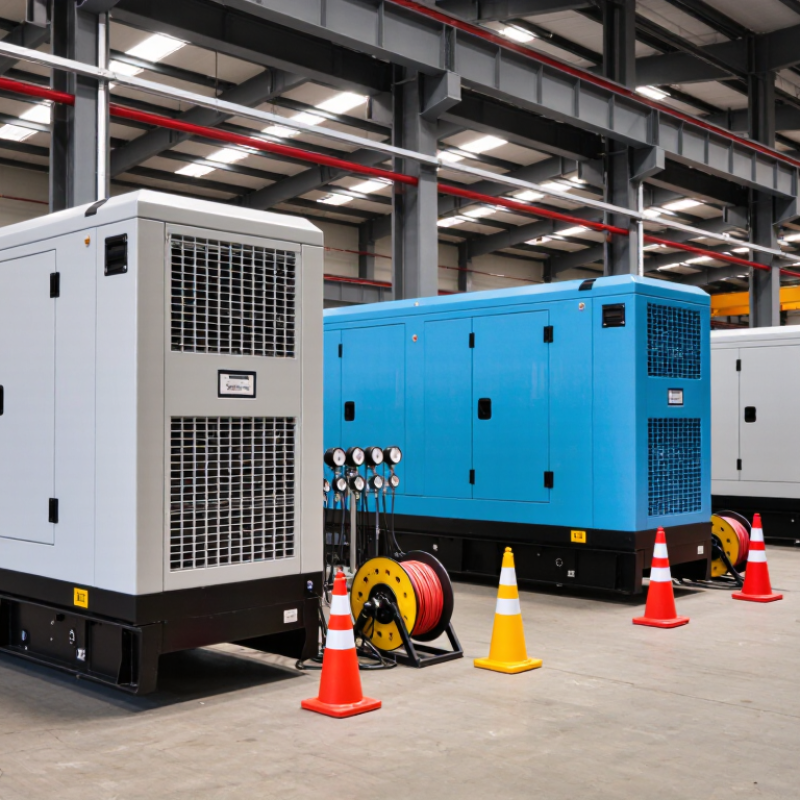
China Top Three Phase Diesel Generator Suppliers?

Market Criteria: 400 V, 50 Hz, 10–2,000 kVA Three-Phase Generators

China Top Three Phase Diesel Generator Suppliers?

For 400 V, 50 Hz projects, the strongest Chinese shortlist usually contains three supplier profiles: factory manufacturers, engineering integrators, and export-focused assemblers. Each should cover 10–2,000 kVA three-phase sets. The range is wide. A 10 kVA unit may support a clinic, while a 2,000 kVA set can protect industrial production. The IEA’s Electricity 2024 report forecasts global electricity demand growth of about 3.4% annually through 2026. Reliable backup capacity is becoming more important.

Check ratings carefully. ISO 8528-1 separates standby, prime, and continuous applications. These ratings are not interchangeable. Ask for alternator efficiency, voltage regulation, fuel consumption, acoustic data, and load-bank test records. A credible supplier should explain transient response at 50% and 100% load. It should also provide wiring diagrams, factory acceptance results, and service-part availability. I would not trust a low price without these documents. A spreadsheet can hide weak cooling design.

Tips: Confirm 400 V phase-to-phase output, neutral configuration, frequency stability, and automatic transfer-switch compatibility. Request a complete 10–2,000 kVA product schedule. Verify performance using ISO 8528 procedures, not marketing phrases. For coastal sites, specify anti-corrosion treatment. For high-altitude sites, request derating calculations. Small details matter.

Supplier One: Weichai Power—Engine Range, ISO 8528 Ratings, and Service Network

A leading Chinese supplier offers diesel generator sets across compact, mid-range, and heavy-duty engine classes. This range supports construction sites, hospitals, factories, and remote facilities. Engine selection depends on prime power, standby demand, altitude, ambient temperature, and expected loading. A unit that looks oversized may still perform poorly under light loads.

From my experience reviewing generator specifications, ISO 8528 alignment matters more than a simple compliance claim. Buyers should check rated power, frequency stability, voltage regulation, transient response, and applicable duty class. Prime and standby ratings must remain clearly separated. Datasheets sometimes use impressive numbers without explaining operating conditions. That gap deserves attention.

Service coverage is equally practical. A strong network should provide trained technicians, genuine replacement parts, commissioning support, and response plans near the installation site. Ask how quickly filters, controllers, and injectors can be supplied. Ask about remote monitoring, too. It can reduce unnecessary site visits. However, remote access is not a substitute for skilled field work. I would also inspect service records from similar projects, not only listen to sales promises. Small details matter. Availability can vary by region, and local training may be uneven. That should be tested before signing a long-term maintenance agreement.

Supplier Two: Yuchai—Fuel Efficiency, Emissions Compliance, and Product Capacity

Supplier Two: Fuel Efficiency, Emissions Compliance, and Product Capacity

This Chinese manufacturer targets demanding standby and prime-power applications. Its diesel generator range covers compact units, industrial packages, and multi-megawatt systems. That breadth helps contractors match output to hospitals, factories, data centers, and remote worksites. However, larger capacity does not automatically mean better efficiency.

Fuel performance depends on load. A generator operating near 70–80% load usually uses fuel more effectively than one running lightly for long periods. The U.S. Department of Energy reports that modern diesel engines typically convert roughly 40% of fuel energy into useful mechanical power. Site conditions can reduce that figure. Heat, altitude, poor maintenance, and oversized equipment all matter. Small details matter.

Emissions compliance is another practical strength. For applicable nonroad engines, U.S. EPA Tier 4 Final limits can reduce particulate matter by up to 50% and nitrogen oxides by up to 80% compared with Tier 3 levels. The supplier’s emission-focused models use electronic injection, optimized combustion, and after-treatment systems to support these requirements. Yet compliance claims should be checked against the exact engine rating and destination market. Certification is not universal across every configuration. ISO 8528-5 also provides a useful framework for evaluating generator performance and transient response. In field use, published fuel curves may look impressive, but actual results can vary. That gap deserves more testing.

Interpretation: Specific fuel consumption generally decreases as load increases because the engine operates closer to its designed efficiency range. The values shown are representative diesel generator benchmarks, while actual fuel use and emissions compliance depend on engine size, operating conditions, after-treatment, and the applicable market standard.

Supplier Three: SDEC—Prime-Power Performance, IEC 60034 Compliance, and Support

A strong third supplier in the diesel generator market should deliver more than rated output. Its prime-power systems must handle changing loads, extended operating hours, and demanding industrial sites. In practical installations, stable voltage matters when pumps, compressors, and control panels start together. The alternator and engine should also be selected as one balanced system.

Alignment with IEC 60034 provides a useful technical reference for rotating electrical machines. Buyers should review insulation class, temperature rise, efficiency, and protection details before ordering. Factory test records add credibility, especially when they include load-bank results and voltage stability readings. Yet paperwork is not enough. A site engineer should verify ventilation, fuel quality, cable sizing, and grounding conditions. Small oversights can reduce real-world performance. I have seen otherwise capable equipment lose efficiency because installation assumptions were too optimistic.

Tips: Ask for a clear prime-power duty rating, not only standby output. Confirm local commissioning support, response times, and spare-parts availability. Request maintenance intervals with practical service access, including filter replacement and coolant checks. Remote monitoring can help, but it should not replace physical inspections. A supplier may promise rapid support, while actual coverage depends on region and technician availability. That detail deserves written confirmation before purchase.

Supplier Three: Prime-Power Performance, IEC 60034 Compliance, and Support

Evaluation Dimension Reference Data Technical Meaning Buyer Verification Point
Three-Phase Output 400/230 V, 50 Hz, 3-phase, 4-wire A common low-voltage configuration for commercial and industrial installations. Confirm the required voltage, frequency, phase sequence, and neutral arrangement.
Power-Factor Basis 0.8 lagging At 0.8 power factor, a 500 kVA set corresponds to approximately 400 kW of active power. Match the generator rating to motor loads, power-factor correction equipment, and harmonic-producing loads.
Prime-Power Duty Variable-load operation; average load commonly limited to 70% of prime rating over a defined operating period Prime power is intended for variable loads where operating hours and load profile are controlled according to ISO 8528 requirements. Request the exact prime-power definition, allowable overload, annual running hours, and load profile assumptions.
Standby-Power Duty Emergency backup service with limited annual operating hours Standby ratings are designed for utility interruptions rather than continuous or base-load operation. Do not use a standby rating for continuous operation without written engineering approval.
Rotating-Machine Standard IEC 60034-1 Covers key requirements for rotating electrical machines, including ratings, performance, temperature-rise limits, and testing principles. Request the applicable edition, declaration of conformity, test records, and alternator technical datasheet.
Generating-Set Standard ISO 8528 series Provides the principal framework for reciprocating-engine AC generating sets, including ratings, performance, and test requirements. Check whether the quoted performance test follows the relevant ISO 8528 parts.
Alternator Configuration 4-pole synchronous alternator; 1,500 rpm at 50 Hz A 4-pole machine operating at 1,500 rpm produces 50 Hz at synchronous speed before slip and control considerations. Verify speed, frequency, excitation system, voltage regulation, and transient-performance data.
Insulation and Enclosure Typical industrial reference: Class H insulation; IP23 alternator protection Class H indicates the insulation-system temperature class; IP23 provides protection against solid objects above 12.5 mm and spraying water up to 60° from vertical. Confirm the actual insulation class and IP rating for the selected configuration and installation environment.
Voltage Regulation Automatic voltage regulation; final value depends on alternator and control system The AVR maintains generator voltage as load changes, but performance depends on load type, excitation design, and controller settings. Obtain steady-state regulation, transient voltage dip, recovery time, and motor-starting data.
Protection Functions Overspeed, low oil pressure, high coolant temperature, over/under-voltage, and over/under-frequency These functions help protect the engine, alternator, connected loads, and operators during abnormal conditions. Review the controller alarm list, shutdown thresholds, event log, and emergency-stop arrangement.
Factory Acceptance Testing Load-bank test at specified load points Testing can validate voltage, frequency, temperature, fuel consumption, load response, and safety shutdowns before shipment. Specify test load, duration, instruments, acceptance limits, and whether witnessed testing is available.
Service and Parts Support Commissioning, preventive-maintenance schedule, troubleshooting, and replacement-parts availability Lifecycle support directly affects availability, maintenance cost, and restoration time after a fault. Confirm response time, technician coverage, warranty scope, service intervals, and parts lead times in writing.

Note: Final ratings, emissions performance, noise levels, fuel consumption, dimensions, and compliance documentation must be confirmed from the selected configuration’s official technical documentation.

Technical Comparison: kVA Output, Fuel Consumption, Noise, Warranty, and Lead Time

When comparing China’s top three-phase diesel generator suppliers, buyers should start with usable kVA output, not brochure ratings. A 500 kVA set may deliver different continuous power under hot, dusty site conditions. Ask for prime and standby ratings, alternator efficiency, and test records at 25%, 50%, and 100% load. Site experience matters here. I have seen undersized units run hot because the load profile was guessed.

Fuel consumption should be checked in liters per hour at defined loads. Comparing only full-load figures can mislead. Request BSFC data, engine model, ambient assumptions, and fuel quality requirements.

At 75% load, a well-matched set usually offers better economy than an oversized unit cycling lightly. Noise needs equal care. Ask for sound pressure readings at seven meters, with and without an acoustic enclosure. A quiet factory test may not match a concrete yard.

Warranty terms reveal supplier reliability. Check coverage for the engine, alternator, controller, batteries, and labor. Clarify response times, spare-parts stock, and authorized service access in your region. Lead time should include production, factory testing, documentation, and shipping preparation. “Ready stock” may exclude a required automatic transfer switch or weatherproof canopy. Independent load-bank testing adds confidence, although it costs more. One weakness remains: published figures are not always comparable. Require the same test standard and written assumptions before ranking the three suppliers.