China’s packaging industry is changing quickly, driven by labor pressure, export growth, and stricter quality expectations. This article introduces China’s top 10 packaging automation equipment manufacturers and examines what separates dependable suppliers from impressive-looking vendors.
The review considers filling, labeling, cartoning, case packing, palletizing, and integrated production lines. It also evaluates engineering experience, factory capacity, customization, controls, after-sales support, and documented customer performance. A reliable supplier should explain cycle speeds clearly, demonstrate machine stability, and provide practical spare-parts support. Shiny stainless steel is not enough.
Jim Pittas, President and CEO of PMMI, has said, “Automation is a key component to the future of packaging.” This view reflects what manufacturers increasingly experience on the factory floor. A well-designed packaging automation equipment system can reduce repetitive handling, improve consistency, and connect inspection data with production decisions. The benefits appear in small details: fewer crooked labels, steadier carton sealing, and less product waiting beside the conveyor.
However, no ranking is flawless. Supplier strength can vary by product type, order volume, software needs, and export destination. Some companies excel at standard machines but struggle with complex integration. Others offer strong engineering yet limited overseas service. Buyers should request factory demonstrations, verified references, safety documentation, and realistic delivery schedules.
This guide therefore avoids judging manufacturers by size alone. It focuses on usable evidence, technical depth, and long-term reliability. Some conclusions may need updating as the market evolves. That is worth admitting. Good equipment decisions require careful comparison, not convenient assumptions.
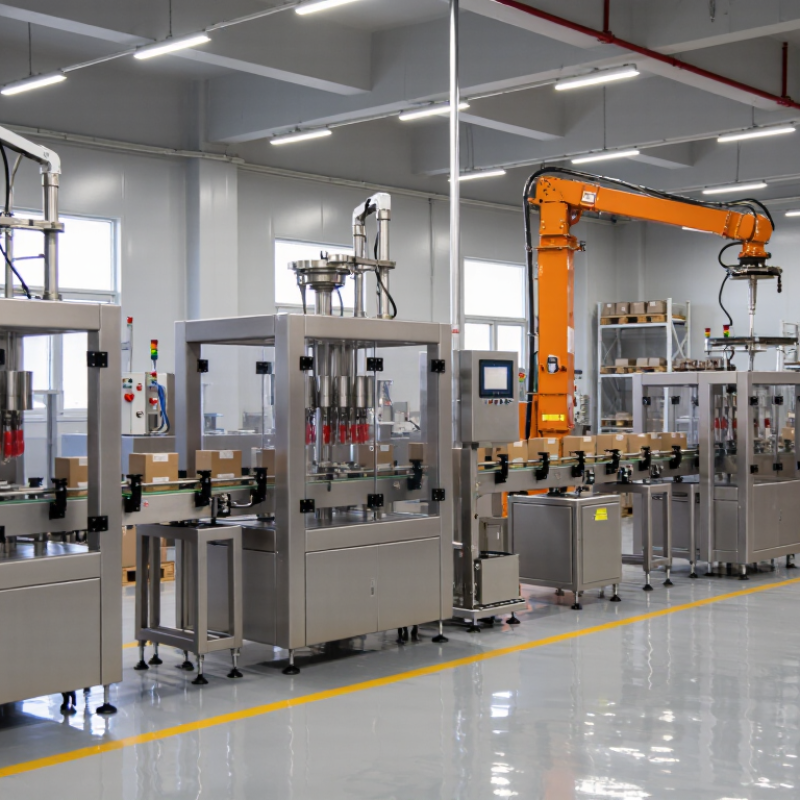
Packaging automation equipment refers to machines and integrated systems that prepare products for safe, consistent distribution. Its scope includes filling, weighing, sealing, labeling, coding, cartoning, palletizing, and inspection. A typical line may connect a hopper, conveyor, vision camera, and robotic arm. Each unit performs a defined task. Together, they control product flow, package accuracy, traceability, and operator safety.
Core functions depend on accurate sensing and coordinated movement. Load cells check weight, while sensors detect gaps between containers. Servo motors manage positioning and speed. Machine vision reads printed information and rejects damaged packages. A programmable controller coordinates timing across the line. Automation reduces repetitive handling and records useful production data. It does not remove every risk. Poor changeover settings can still create jams, waste, and downtime.
When reviewing China’s top ten packaging automation equipment manufacturers, buyers should examine more than rated speed. Practical tests should measure uptime, changeover time, rejection accuracy, energy use, and maintenance access. Factory acceptance testing can reveal problems hidden in brochures. Clear alarms and cleanable surfaces matter too. A fast machine is not always a useful machine. In real production, setup losses may outweigh impressive output figures. I may overvalue speed when comparing specifications, so operator feedback and service response deserve equal attention.
Packaging automation equipment covers machines and integrated systems used to move, handle, fill, seal, inspect, label, pack, and palletize products. The chart compares major equipment scopes by the number of commonly automated core functions included in each area. The values represent functional coverage, not company market share or revenue.
China Top 10 Packaging Automation Equipment Manufacturers
Key Technologies Driving China’s Packaging Automation Industry
China’s packaging automation sector is moving from isolated machines toward connected production cells. Machine vision now checks labels, seals, and fill levels at line speed. Servo motors improve positioning accuracy, while collaborative robots support case packing and palletizing. According to IFR’s World Robotics 2024 report, China installed 276,288 industrial robots in 2023, representing about 51% of global installations. Packaging factories are an important part of this wider automation demand.
Industrial Internet of Things platforms are becoming the control layer. Sensors collect data on temperature, vibration, energy use, and downtime. Digital twins can test line changes before engineers stop production. Artificial intelligence also helps detect defects, although poor training data still creates false alarms. PMMI’s 2024 Packaging Compass report highlights labor shortages, flexible formats, and operational efficiency as major investment drivers. The technology is advancing quickly. Integration remains uneven.
Tips: Ask for open communication protocols, measurable inspection accuracy, and spare-part availability. Test the system with real packaging materials, not samples alone. Review cybersecurity controls before connecting equipment to factory networks. A cheaper machine may become expensive when changeovers stay manual. That point is often underestimated.
Anonymized technology-focused benchmark. Manufacturer names and brands are intentionally omitted; operating figures are representative ranges commonly used for comparable packaging automation equipment in China.
| Rank | Anonymized Manufacturer Profile | Primary Equipment Focus | Key Technology | Typical Throughput | Typical Changeover Time | Motion and Control Architecture | Quality and Inspection Functions | Applicable Packaging Formats | Typical End-Use Sectors | Compliance and Connectivity |
|---|---|---|---|---|---|---|---|---|---|---|
| 1 | Profile A Integrated secondary-packaging automation specialist |
Cartoning, case packing, robotic palletizing and end-of-line integration | Servo-driven intermittent and continuous motion, robotic pick-and-place, recipe management and automatic format adjustment | 30–120 cartons/min Up to 15–25 cases/min |
15–45 minutes | Multi-axis servo system with PLC-based line synchronization and safety interlocks | Barcode verification, carton presence detection, seal inspection and reject tracking | Cartons, trays, wraparound cases and pallet loads | Food, beverages, household products and personal care | ISO 9001 quality systems; CE-oriented machine safety design; Ethernet-based production data exchange |
| 2 | Profile B High-speed form-fill-seal equipment specialist |
Vertical form-fill-seal, weighing, dosing and bagging systems | Multi-head weighing, auger dosing, gravimetric control, film registration and automatic tension control | 40–100 bags/min | 20–50 minutes | Servo film transport, digital temperature control and synchronized dosing axes | Checkweighing, missing-product detection, seal-temperature monitoring and metal-detection integration | Pillow bags, gusseted bags, sachets and quad-seal bags | Snacks, grains, powders, frozen foods and agricultural products | Food-contact material compatibility; HACCP-oriented process design; optional production data logging |
| 3 | Profile C Flexible pouch and premade-bag automation specialist |
Premade pouch filling, vacuum packing and modified-atmosphere packaging | Robotic pouch handling, servo indexing, vacuum control and gas-flushing management | 25–70 pouches/min | 20–60 minutes | PLC-controlled rotary or linear indexing with servo grippers and centralized recipe control | Open-pouch detection, fill-level inspection, seal-integrity monitoring and code verification | Stand-up pouches, flat bags, vacuum bags and zipper pouches | Ready meals, meat, seafood, pet food and medical consumables | Hygienic design options; stainless-steel contact zones; traceability-ready control architecture |
| 4 | Profile D Robotic palletizing and material-handling specialist |
Case palletizing, depalletizing, conveying and warehouse-transfer systems | Six-axis robotics, pallet pattern programming, machine vision and automated layer forming | 600–1,200 cases/hour | 10–30 minutes | Robot controller integrated with PLC, conveyor drives, safety scanners and pallet dispensers | Case orientation checks, pallet-pattern verification and load-stability monitoring | Cases, cartons, sacks, trays and stretch-wrapped pallets | Beverages, food, chemicals, building materials and logistics | Risk-assessed safeguarding; safety-light-curtain integration; warehouse-management connectivity options |
| 5 | Profile E End-of-line wrapping and bundling specialist |
Shrink wrapping, stretch wrapping, bundling and film-based secondary packaging | Servo film control, automatic film splicing, tension regulation and heat-profile management | 15–45 packs/min | 15–40 minutes | Servo indexing with variable-frequency conveyor drives and digital temperature controllers | Film-break detection, pack-count verification, seal inspection and product-position sensing | Multipacks, trays, bundles and palletized loads | Beverages, tissue, household goods and industrial products | Energy-saving operating modes; safety guarding; optional OEE and downtime monitoring |
| 6 | Profile F Liquid and paste filling automation specialist |
Volumetric filling, piston filling, pump filling, capping and bottle handling | Mass-flow or volumetric dosing, no-bottle-no-fill logic, anti-drip filling and automatic level control | 30–180 containers/min | 20–60 minutes | Servo-driven pumps or synchronized piston systems with PLC recipes and sensor feedback | Fill-level verification, cap-presence detection, torque monitoring and leak testing | Bottles, jars, tubes and rigid containers | Cosmetics, beverages, sauces, pharmaceuticals and chemicals | Hygienic stainless-steel options; batch-record capability; clean-in-place compatibility on selected systems |
| 7 | Profile G Labeling, coding and track-and-trace integration specialist |
Pressure-sensitive labeling, sleeve labeling, coding and serialization integration | Vision-guided label positioning, thermal or inkjet coding, database-linked serialization and reject management | 60–300 containers/min | 10–30 minutes | Encoder-based line tracking with PLC coordination and networked print-and-apply control | Code grading, barcode reading, label presence checks and camera-based alignment inspection | Bottles, cartons, cases, pouches and shipping labels | Food, beverage, pharmaceutical, cosmetics and logistics | Supports traceability workflows, electronic batch records and industrial Ethernet communication |
| 8 | Profile H Blister, pouch and healthcare-packaging automation specialist |
Blister packing, sachet packing, cartoning and medical-device packaging | Thermoforming, servo indexing, forming-pressure control, vision inspection and clean-process engineering | 40–150 cycles/min | 30–90 minutes | Servo-controlled forming and sealing stations with validated recipe parameters | Tablet or component presence inspection, seal-area inspection, print verification and reject confirmation | Blisters, sachets, pouches, cartons and unit-dose packs | Pharmaceuticals, medical devices, nutraceuticals and healthcare products | GMP-oriented design options; audit-trail support; validated process-parameter management |
| 9 | Profile I Can, bottle and rigid-container line specialist |
Container rinsing, filling, sealing, conveying and complete beverage-line automation | Synchronized rotary handling, electronic flow control, pressure management and hygienic line balancing | 120–600 containers/min | 30–75 minutes | High-speed servo or cam-driven modules coordinated by PLC and line-control software | Container inspection, cap detection, fill-height monitoring, leak testing and date-code verification | Cans, PET containers, glass bottles and rigid jars | Beverages, dairy, edible oils, condiments and household liquids | Hygienic production design; CIP-ready configurations; line-level energy and output monitoring |
| 10 | Profile J Custom packaging-line integration specialist |
Turnkey packaging cells, conveyors, inspection, case packing and plant integration | Modular automation, digital twin or offline simulation, machine vision, remote diagnostics and flexible robotics | 20–100 primary packs/min Application dependent |
20–90 minutes | Integrated PLC, HMI, servo drives, robots, safety systems and supervisory production software | Inline vision, checkweighing, barcode traceability, fault diagnosis and automated reject handling | Flexible formats including bags, cartons, bottles, trays and cases | Food, cosmetics, consumer goods, electronics and industrial products | Modular compliance documentation; MES/ERP integration options; OEE, alarm and maintenance dashboards |
Evaluating China’s leading packaging equipment manufacturers requires more than comparing prices. Practical experience shows that stable output, clean changeovers, and accessible technical support matter most on a busy production floor. The International Federation of Robotics reported 276,288 industrial robots installed in China during 2023, representing 51% of global installations. This scale suggests strong automation capability, but robot volume alone cannot prove packaging expertise.
Look for measurable performance. Ask for verified cycle speed, overall equipment effectiveness, changeover time, reject rate, and energy use. Request test videos with your actual film, cartons, products, and pallet patterns. A reliable supplier should explain sensor selection, safety functions, software compatibility, and spare-parts availability. PMMI’s packaging machinery research identifies labor shortages, flexible production, and digital integration as important investment drivers. Therefore, assess whether the machine supports remote diagnostics, production data export, and quick format changes. Do not accept vague claims.
Tips: Use a weighted scorecard. Give service response time and commissioning support the same importance as purchase cost. Check factory acceptance records and speak with recent users. Small details matter. Ask how long a technician needs to replace a worn sealing blade.
Compliance evidence also deserves close review. Confirm applicable electrical, mechanical, and guarding standards for the destination market. Examine manuals, risk assessments, training plans, and validation records. A strong manufacturer should provide traceable component information and documented software revisions. My own caution is simple: no scorecard is perfect. A polished demonstration may hide maintenance difficulty, unstable materials, or operator learning gaps. Test under realistic conditions, including low-speed starts, product variation, and repeated changeovers.
China’s top packaging automation equipment manufacturers serve food, medicine, household goods, and industrial products. Their portfolios commonly include filling machines, labeling systems, cartoners, case packers, palletizers, and inspection units. A practical profile should examine more than production speed. It should review machine stability, material compatibility, control software, cleaning access, and operator safety.
Several leading manufacturers focus on complete production lines. Their engineers connect conveyors, weighing systems, sealing units, and robotic handling equipment. Others specialize in flexible machines for smaller factories and changing product formats. One manufacturer may excel at powder filling, while another performs better with fragile containers. Factory visits can reveal useful details, such as cable protection, spare-part storage, and the time required for format changes. These details often matter more than polished brochures.
Reliable suppliers usually provide factory acceptance testing, installation guidance, training, and documented maintenance schedules. They also explain output limits under real operating conditions, not only laboratory settings. Independent verification remains important. Some performance figures require closer inspection. A fast machine may create more waste or demand frequent adjustment. Energy use, noise levels, local service coverage, and software updates deserve equal attention. No shortlist is perfect. Buyers should compare trial results, warranty terms, compliance records, and references from similar production environments before making a decision.
China’s packaging automation market is expanding with e-commerce, food processing, beverage production, and pharmaceutical manufacturing. The China State Post Bureau recorded 132.07 billion express parcels in 2023, creating demand for faster sorting, case packing, labeling, and palletizing systems. The International Federation of Robotics reported 276,288 industrial robots installed in China during 2023, representing about 51% of global installations. These figures show strong automation capacity, but they do not measure packaging alone.
Applications vary by factory scale. A snack plant may need multi-lane weighing, vertical bagging, metal detection, and robotic case packing. An export warehouse may prioritize vision inspection, carton sealing, and automatic pallet wrapping. Leading Chinese manufacturers often compete through modular design, short lead times, and local service coverage. Yet buyer decisions should examine more than machine speed. Confirm real throughput with the intended product, packaging film, and shift pattern. Request changeover tests using actual operators.
Useful metrics include overall equipment effectiveness, unplanned downtime, energy consumption, and spare-parts availability. Integration also matters. The equipment should communicate reliably with warehouse, production, and quality systems. China’s GB standards and destination-market requirements must be checked before purchase. Total cost is often underestimated when training, tooling, maintenance, and software updates are excluded. Market reports provide direction, not certainty. Factory trials remain essential, because brochure performance can differ from daily production. A cheaper line may become expensive after repeated stoppages.