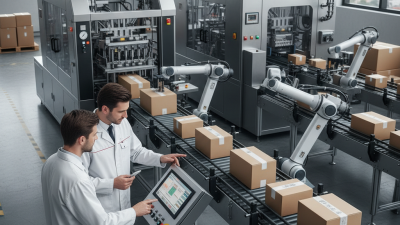
What is the best packaging equipment in 2026? The honest answer depends on the product, line speed, labor availability, and sustainability targets. A high-speed vertical form-fill-seal machine may suit snack foods, while a servo-driven cartoner may better protect pharmaceuticals. The best choice is rarely the newest machine. It is the equipment that performs reliably during ordinary shifts, product changes, cleaning, and unexpected delays.
Industry data shows why this decision deserves careful testing. PMMI’s 2024 State of the Industry report identifies labor shortages, automation, and operational efficiency as major packaging priorities in North America. Smithers’ market analysis, The Future of Global Packaging to 2029, also links packaging growth with automation, lightweight materials, and improved production control. Meanwhile, the International Energy Agency reports that industry must improve energy efficiency to support broader emissions reductions. These findings point toward equipment with precise servo motion, lower compressed-air demand, remote diagnostics, and adaptable control systems. Useful technology should reduce waste, not simply add screens.
In practice, buyers should measure more than advertised speed. Watch the machine run with real film, filled containers, sticky products, and imperfect cartons. Record changeover time, seal quality, rejected packs, energy use, and operator workload. A supplier’s factory acceptance test matters. So does service response after installation. No machine is perfect. Even excellent equipment can disappoint when maintenance skills, spare parts, or factory layouts are overlooked. This article examines the leading packaging equipment options for 2026 and compares their performance, flexibility, ownership cost, and practical value. The goal is not to crown one universal winner, but to identify the right fit for each production environment.
The best packaging equipment is not simply the fastest machine. It must deliver stable output, accurate dosing, and consistent seal quality. In real production, small errors can create expensive waste. A reliable system records performance data and shows problems before downtime becomes serious. Operators should understand its controls without constant technical support. Clear interfaces matter, especially during busy shifts. Safety features must protect workers during cleaning, adjustment, and maintenance. Equipment should also connect with existing production systems. Compatibility is often overlooked.
Energy use now deserves closer attention. Efficient motors, reduced compressed-air demand, and shorter changeover times can lower operating costs. Flexible equipment is valuable when package sizes or materials change frequently. However, flexibility can increase mechanical complexity. That is where many evaluations become too optimistic. I have seen impressive demonstrations fail under dust, vibration, or uneven operator training. A practical trial with real materials is more trustworthy than a polished sales presentation. Total cost should include spare parts, service access, training, and expected downtime.
Tips: Measure actual output during a full shift. Test the equipment with difficult package sizes. Ask for maintenance intervals and documented performance data. Check whether common replacement parts are locally available. Leave room for human error. The best system is not perfect; it is predictable, repairable, and suitable for the people using it.
What Is the Best Packaging Equipment in 2026?
The best packaging equipment depends on the product, not the catalogue speed. PMMI’s 2024 State of the Industry report places U.S. packaging machinery shipments above $10 billion in 2023. That investment reflects rising automation demand, but faster is not always better. A fragile snack, liquid, powder, or medical device needs different control, sealing, and inspection methods. Start with product behavior. Measure flow, moisture, particle size, temperature, and package strength. Small details matter.
Run trials using the real product and final packaging material. Record fill accuracy, seal strength, reject rate, changeover time, and cleaning duration. For food applications, verify hygienic design and accessible contact surfaces. For sensitive products, check temperature exposure and damage during transfer. A machine that reaches 120 packs per minute may perform poorly after frequent format changes. It looks impressive. The factory results may disagree.
Total cost should include labor, energy, spare parts, compressed air, software, and planned downtime. Smithers’ packaging research continues to show strong pressure for lightweight and more sustainable formats. Therefore, test thinner films and recycled-content materials before purchasing. They may require different sealing temperatures or tension controls. Ask for documented acceptance criteria, training records, and service response times. I would also question optimistic supplier estimates. A neat spreadsheet can still mislead. One overlooked cleaning step may erase the expected payback. Choose equipment that remains stable during ordinary, imperfect production days.
What Is the Best Packaging Equipment in 2026?
The best packaging machine depends on production speed, product shape, fill accuracy, and available labor. For small batches, an intermittent vertical form-fill-seal machine offers quick changeovers and modest floor-space needs. Liquid products need volumetric or flow-meter fillers. Powder lines often require auger dosing and dust control. Fragile items may need gentle rotary filling or robotic pick-and-place systems.
For high-volume operations, continuous-motion machines can improve output, but they demand stable materials and experienced technicians. Cartoners suit standardized retail packs, while case packers fit larger secondary packaging. Checkweighers and vision inspection systems support quality control without slowing the main line. PMMI’s 2024 State of the Industry report valued U.S. packaging machinery shipments at approximately 10.2 billion dollars in 2023. The report also highlighted automation, labor availability, and sustainability as major investment factors. Global packaging machinery forecasts vary, but Mordor Intelligence projects market growth from about 55.7 billion dollars in 2025 to 74.1 billion dollars by 2030.
Tips: Measure real production, not target production. Test the hardest product first. Ask for changeover trials, cleaning time, spare-parts access, and operator training. A faster machine can become a poor investment when films wrinkle, seals fail, or formats change weekly. I have seen specifications look excellent on paper. Factory conditions often disagree. Leave capacity headroom, but not excessive capacity. That mistake can raise energy, maintenance, and training costs.
| Production Requirement | Recommended Equipment | Typical Products | Suitable Package Formats | Indicative Output Range | Common Product-Contact Materials | Key Advantages | Important Limitations | Automation Level | Best-Fit Operation |
|---|---|---|---|---|---|---|---|---|---|
| High-volume packaging of free-flowing dry products | Vertical Form-Fill-Seal Machine with Multihead Weigher | Snacks, confectionery, frozen foods, hardware pieces, produce | Pillow bags, gusseted bags, block-bottom bags | Approximately 30–120 bags/min, depending on product, bag size, and weighing configuration | Food-grade stainless steel, coated or stainless weighing buckets | High throughput; flexible bag sizes; accurate weighing for mixed or irregular products; efficient film use | Less suitable for fragile, sticky, dusty, or very fine products without additional dosing and dust-control systems | High; can integrate with conveyors, checkweighers, metal detectors, and case packing | Large and medium production runs with frequent bag-size changes |
| Accurate filling of powders and fine dry materials | Auger Filler with Vertical Form-Fill-Seal Machine | Flour, spices, coffee, powdered ingredients, chemical powders | Pillow bags, gusseted bags, sachets, small pouches | Approximately 20–80 bags/min, depending on powder behavior and fill weight | Stainless steel auger and contact parts; sealed powder-handling assemblies | Controlled volumetric dosing; suitable for low- to medium-flow powders; compact footprint | Powder density changes can affect accuracy; dust extraction and sealing cleanliness may be required | High; recipe control and automatic film tracking are commonly available | Powder products requiring repeatable fills and clean heat seals |
| Packaging liquids, sauces, and semi-liquids | Piston or Servo Pump Filler with Premade-Pouch or VFFS System | Sauces, detergents, edible oils, creams, gels | Spouted pouches, sachets, three-side-seal pouches, bottles | Approximately 20–100 packs/min, depending on viscosity, fill volume, and pouch design | Stainless steel, food-grade elastomers, and application-specific hygienic seals | Good control of fill volume; handles a broad viscosity range; supports clean-in-place options on suitable systems | Dripping, foaming, and product viscosity can reduce speed and filling accuracy; sanitation design is critical | Medium to high | Food, household, personal-care, and chemical products in liquid or viscous form |
| Small portions, samples, and single-use products | Sachet or Stick-Pack Machine | Sugar, salt, instant beverages, condiments, powders, liquid samples | Three-side-seal sachets, four-side-seal sachets, stick packs | Approximately 30–300 lanes or packs/min, depending on machine configuration and product | Stainless steel product-contact components; compatible laminated or coated packaging films | Efficient use of film; compact portions; high output in multi-lane configurations | Format changes and multi-lane maintenance can be demanding; limited fill-volume range per setup | High | High-volume single-serve products and promotional samples |
| Premium products requiring a preformed flexible package | Premade-Pouch Filling and Sealing Machine | Pet food, snacks, coffee, powders, medical products, specialty foods | Stand-up pouches, flat pouches, zipper pouches, spouted pouches | Approximately 20–80 pouches/min, depending on pouch size, filling method, and sealing requirements | Stainless steel product-contact surfaces; pouch materials selected for barrier and seal performance | High presentation quality; supports zippers, spouts, shaped pouches, and modified-atmosphere options | Premade pouches generally cost more than rollstock; empty-pouch handling requires consistent dimensions | Medium to high | Premium, flexible, and frequently changing product ranges |
| Rigid containers with accurate dry-product dosing | Linear or Rotary Weigh-Filling Line | Grains, nuts, snacks, pet food, seeds, detergent granules | Jars, cans, tubs, rigid plastic containers | Approximately 20–120 containers/min, depending on head count and target weight | Stainless steel weighing hoppers and product chutes | Accurate net weighing; compatible with rigid containers; easy integration with capping and labeling | Requires a reliable container infeed; less flexible than pouch equipment for lightweight or irregular formats | Medium to high | Products sold in jars, cans, tubs, and other rigid containers |
| Cartoning of retail products and secondary packaging | Horizontal or Vertical Cartoning Machine | Food cartons, pharmaceutical packs, personal-care products, household goods | Folding cartons with tuck or glue closures | Approximately 30–400 cartons/min, depending on carton size, loading method, and product orientation | Stainless steel and wear-resistant machine components; cartonboard is the main packaging substrate | Consistent carton erection and closing; supports inserts, leaflets, coding, and tamper-evident features | Carton dimensions and board quality must be consistent; changeover tooling may be needed | Medium to high | Retail products requiring organized presentation and protection |
| Loading products into shipping cases at scale | Case Packer | Bags, cartons, bottles, cans, trays, and multipacks | Regular slotted cases, wraparound cases, trays with lids | Approximately 10–60 cases/min, depending on pack pattern and case style | Stainless steel and painted or coated structural components; corrugated board for cases | Reduces manual case packing; consistent pack patterns; suitable for palletizing-line integration | Product dimensions and orientation must be controlled; changeovers can be complex for many formats | Medium to high | Medium- to high-volume secondary packaging and distribution operations |
| Protection of products from air and moisture | Vacuum Packaging Machine or Vacuum Skin Packaging System | Fresh meat, seafood, cheese, prepared foods, technical components | Vacuum pouches, vacuum skin trays, shrink bags | Approximately 5–30 cycles/min, depending on chamber size, tray format, and evacuation requirements | Stainless steel chambers and sealing bars; barrier films selected for oxygen and moisture control | Reduces air exposure; can extend product quality when combined with appropriate storage and food-safety controls | Not suitable for products that deform under vacuum; package performance depends on film, seal integrity, and process control | Medium | Perishable products and components needing reduced air exposure |
| Thermoformed trays, cups, and containers | Thermoform-Fill-Seal Machine | Fresh foods, ready meals, medical devices, industrial components | Thermoformed trays, cups, blister-style packs, sealed compartments | Approximately 5–30 cycles/min, depending on cavity count, material, and sealing process | Stainless steel product-contact areas; forming films may include PET, PP, PS, or multilayer barrier structures | Forms and seals packages in one line; efficient for high-volume standardized formats; supports vacuum or gas flushing | Higher tooling cost; less economical for short runs with many shapes; requires precise film and temperature control | High | Standardized products requiring rigid, sealed, or portioned packaging |
| Application of labels and variable product information | Automatic Labeling and Coding Line | Boxes, bottles, jars, pouches, cases, and shipping containers | Pressure-sensitive labels, wraparound labels, sleeves, printed codes | Approximately 30–300 units/min, depending on container geometry and label placement | Stainless steel or anodized aluminum machine surfaces; label stock and ink selected for the application | Improves traceability; supports date, lot, barcode, and regulatory information; repeatable label placement | Surface shape, condensation, dust, and label adhesion affect performance; inspection may be required | Medium to high | Lines requiring consistent identification, compliance, and retail presentation |
| End-of-line pallet stabilization | Stretch Wrapper or Shrink-Wrapping System | Cartons, cases, trays, sacks, and mixed pallets | Stretch-film wrapped pallets, shrink-wrapped multipacks, bundled cases | Approximately 20–60 pallet loads/hour for many automatic stretch-wrapping applications | Steel machine frame; polyethylene stretch or shrink film | Improves load stability and protection during storage and transport; reduces manual wrapping | Film usage must be optimized; heat-shrink systems require energy and suitable ventilation | Medium to high | Distribution centers and production lines shipping stable pallet loads |
| Labor reduction and flexible line operation | Integrated Robotic Pick-and-Place or Palletizing Cell | Cases, cartons, trays, bags, bins, and mixed-SKU products | Retail-ready cases, pallet layers, mixed-product pallets | Approximately 8–40 picks/min or 10–30 cases/min, depending on robot type, payload, and pattern | Food-grade or industrial stainless steel at product-contact points; grippers matched to the product | Repeatable handling; programmable format changes; reduced lifting and repetitive manual work | Requires guarding, safety controls, reliable product presentation, and skilled maintenance support | High | Facilities seeking scalable automation across several pack formats |

Note: Output figures are indicative planning ranges rather than guaranteed specifications. Actual performance depends on product characteristics, package dimensions, filling accuracy, film or container quality, line configuration, changeover frequency, operator skill, and required inspection or sanitation procedures.
What Is the Best Packaging Equipment in 2026?
How Automation and Smart Technology Improve Packaging Performance
The best packaging equipment in 2026 is not simply the fastest machine. It is equipment that communicates, adapts, and supports consistent daily work. Automated sensors can check film tension, seal temperature, product position, and package weight during production. A vision system can detect a crooked label or an incomplete seal within seconds. Small corrections can prevent large batches of waste.
Connected machines also make maintenance more practical. Vibration sensors may reveal unusual motor movement before a breakdown stops the line. Production software can show downtime patterns, changeover duration, and material usage in one dashboard. Operators can then adjust settings using real operating data, not guesses. That makes training easier, especially when clear alerts explain the problem.
Still, smart technology is not a perfect answer. Poor sensor placement creates unreliable readings. Old equipment may also provide limited data. Human checks remain necessary. An operator might notice loose packaging that software misses. Real experience matters here. I have seen automated lines perform poorly because teams trusted alerts without checking the product itself. Better results come from combining automation with skilled judgment, regular calibration, and simple maintenance routines. Keep the process practical.
Fully automated and smart packaging systems generally deliver higher throughput, better equipment effectiveness, and shorter changeover times. The benchmark values below represent typical operating ranges for packaging lines and are not associated with any specific company or brand.
What Is the Best Packaging Equipment in 2026?
The best packaging equipment balances sustainability, safety, and total cost. Speed alone is not enough. A practical selection begins with the product, package format, and daily changeover demands. OECD’s Global Plastics Outlook reports that plastic waste reached 353 million tonnes in 2019, while only 9% was recycled. Equipment that controls film tension, filling accuracy, and sealing temperature can reduce material losses at the source. Smaller waste bins matter.
Safety must be designed into the machine, not added later. Guarding, emergency stops, interlocks, and clear access points support safer operation and maintenance. OSHA guidance highlights guarding against dangerous points of operation. PMMI’s recent packaging research also identifies automation, labor availability, and sustainability as major investment drivers. Yet automation can create new risks. Poor training and rushed maintenance still cause failures. That deserves honest review.
Tips: Measure energy, scrap, downtime, and changeover minutes before purchasing. Ask for production data from similar applications. Check whether compressed-air use is necessary; the U.S. Department of Energy notes that industrial systems can lose 20–30% of air capacity through leaks. Calculate total cost over five years, including spare parts and technician training. The cheapest machine may become the most expensive mistake. Simpler equipment is sometimes better.